
One hundred and twenty-five years. As a historian staring deeply into the Trevecca story, I realize the significance there—a depth, breadth and length that reminds me of how we got here and what matters from our history. I recognize the markers that reveal the significance of who we are as Trevecca.
To begin, it matters that we started from modest beginnings.
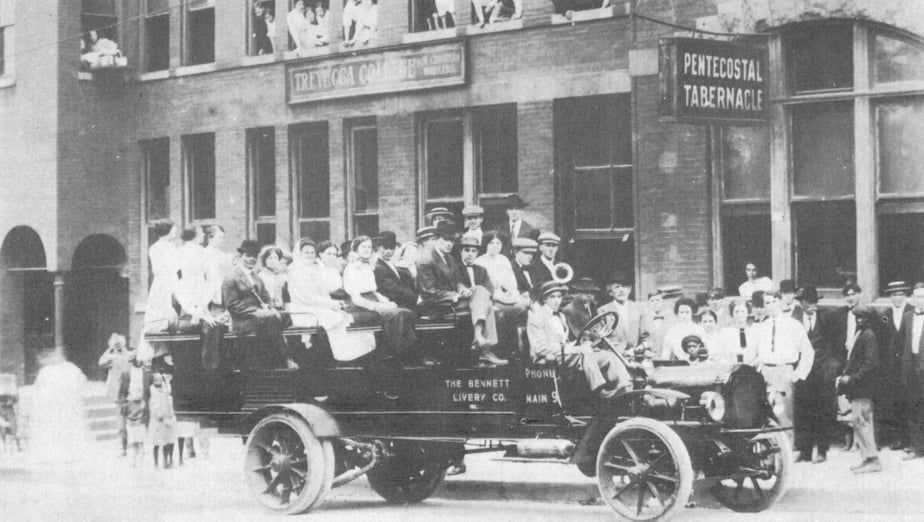
The year was 1898. A series of Chautauqua-style outdoor classes was designed to train young ministers—clergy and lay people—to participate in street ministry in Nashville, a city burgeoning with the excitement of a world’s fair and a holiness end-times revival.
Learning to preach, sing and share the gospel was the curriculum.
Under the tutelage of our founder, James Octavius McClurkan, and his wife, Frances—two farm kids from Houston County, Tennessee—women and men trained in backyards in East Nashville during the day and hit the streets in the evening. Students visited train stations, prisons and busy street corners around the city to win as many to Christ as they could before His imminent return.
Time and place matter, too. When the Lord did not return in 1900, we set our sights toward matters of the future. We dreamed big dreams of Christian service.
Our history is no accident. It is a grand story, begun in the heart of McClurkan, a gentle preacher who once remarked: “I did not choose Trevecca. It was thrust upon me by God.”
Beginning in 1901, we moved indoors and held our first collegiate classes, which included language, science and Bible classes required of all students. That same year we sent our first missionary, W.A. Farmer, to China.
Under McClurkan's leadership, we prospered, the numbers of students increased and God planted Trevecca in places of ministry.
Throughout the years, our campuses have included an abandoned church in East Nashville; an elementary school building in the shadow of the state capitol building that we named our “World Headquarters”; a downtown campus on 4th Avenue where our backdoor neighbor was the Ryman Auditorium and our nearby ministry partners were the Benson Publishing Company and the Salvation Army; and the old Percy Warner estate on Gallatin Road where we held outdoor revival services—“camp meetings”—on campus. From our earliest days, we’ve believed nature is God’s first temple.
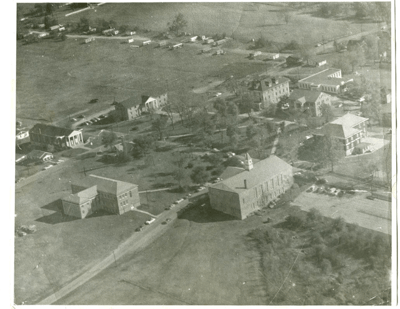
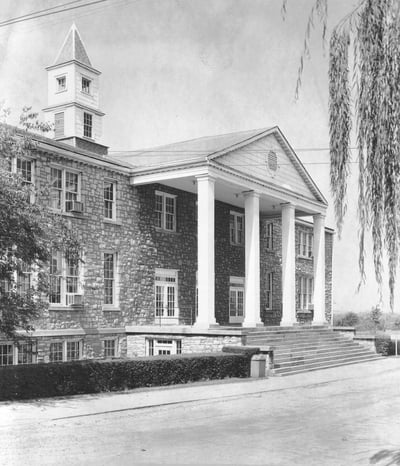 We endured the Depression and eventually moved to a hilltop on Murfreesboro Pike where an orphanage, a hospital and Walden College, a Methodist college for African Americans, had already served Nashville. These buildings matter because they set the pattern for the ministry of Trevecca. All were among the working poor of Nashville, in mixed-race neighborhoods, and along the busy streets and byways of our city.
To the places God has led us, we have focused on the task that matters above all else: Bringing the hope and help of Jesus to those who need him most.
It matters that we remain unapologetically theological in all that we do. Our chapel services have praised and preached the name of the God who has come to us in Jesus Christ.
The singing of Trevecca students rings across the last century. Hymns from the early years like “Wonderful, the Matchless Name of Jesus” and “Deeper Than the Stain Has Gone” continue on in current chapel favorites like “Our God is Able.” We have even recorded radio plays like “Flight Final” and produced worship CDs.
Our classrooms in the 1960s and 1970s brought us the influential group of theologians and educators who would become known as the “Trevecca Connection.”
Led by the great triumvirate of professors William Greathouse, Mildred Bangs Wynkoop and H. Ray Dunning, these spiritual and academic giants headed the Wesleyan revival in the Church of the Nazarene and shaped modern Wesleyan-Holiness theology. They produce enduring works like Greathouse’s “Wholeness in Christ”; Wynkoop’s “A Theology of Love”; and Dunning’s “Grace, Faith, and Holiness: A Wesleyan Systematic Theology” which are still in use in colleges and seminaries today.
We do the serious work of preparing ministers, teachers, healers, missionaries, scientists and business leaders whose lives and work witness to God’s holiness in the world. In 1969, we achieved accreditation under the presidency of Mark Moore. We rang the bell on campus and that benchmark still stands tall as one of the great days in our story.
It matters that Trevecca does its work with God in mind. Working with the gifts and graces of our community, we commit ourselves to lifelong learning and service to the God who created us and created Trevecca.
 We remain committed to our history; to telling our story and finding joy in what He has done. In the earliest years, we held a yearly convention every fall, with a revival to boot, where students came home to tell the Trevecca story and share the blessings of God.
During those conventions, we sang together and heard great preachers like E.F. Walker, later a general superintendent in the Church of the Nazarene, and Charles Price Jones, the celebrated African American minister, who wrote the hymns “Deeper, Deeper (In The Love of Jesus)” and “I Would Not Be Denied.”
These days, we continue that tradition by returning to the Hill for Homecoming. Parades line the streets with kings and queens of the classes, marching bands led by conductors who are Trevecca alumni and floats with alumni from decades reaching back to the 1950s.
Joy fills the air and our hearts as we remember the names of our founders and leaders, those who worship with us but on a distant shore, and the faces of our teachers, mentors, teammates and friends who still live the Trevecca story with us.
Trevecca history matters. History, of course, is not the past. It’s a collection of things—people, places, events, celebrations and graduations—from the past designed to be a useful roadmap for the future. History helps us remember all that God has done here, his provision for us, a place in our lives to prepare us for service, to teach us what really matters as we go.
